
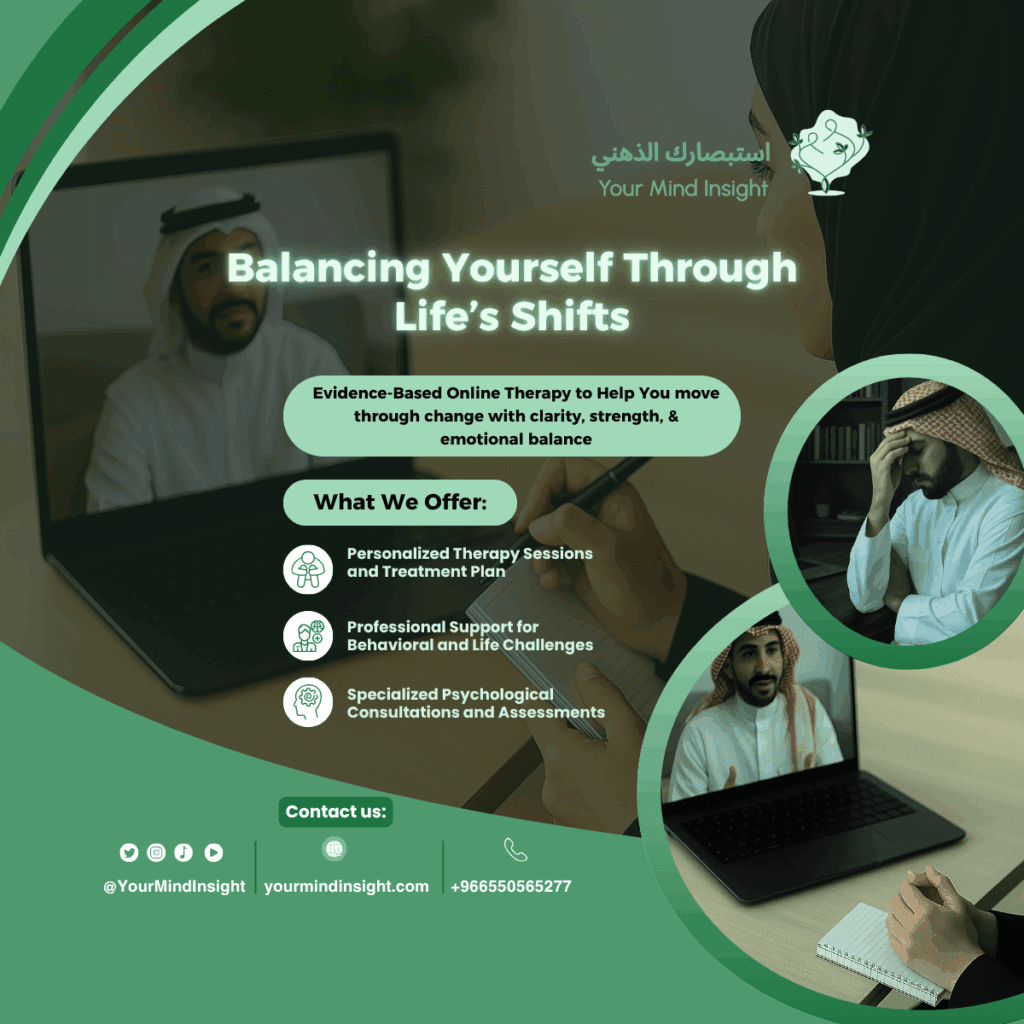
Life Transitions Therapy in Riyadh and Jeddah – A Step Toward a New Beginning
We offer on our platform Your Mind Insight professional Life Transitions Therapy sessions in Riyadh (in-person), as well as online Life Transitions Therapy support across all cities in Saudi Arabia. Our services are provided by a licensed clinical psychologist accredited by the Saudi Commission for Health Specialties. We help individuals navigate life transitions and periods of change in a safe, supportive, and compassionate environment. Our approach focuses on managing stress related to change, building emotional resilience, strengthening coping skills, and supporting clarity, stability, and confidence during personal, relational, or career transitions.
Midlife transitions represent pivotal changes that can significantly shape the course of your life. Whether they involve career shifts, family adjustments, relocation, or in life, these changes often bring challenges but they also present opportunities for a fresh start. Transitional therapy is a powerful tool that can help you navigate these shifts, manage stress, and maintain inner balance amid changing circumstances.
A Journey Toward Adjustment and Growth
Navigating life transitions takes time and effort, but it is achievable. Life transitions therapy is more than discussing challenges it equips you with practical coping strategies, supports goal setting, enhances decision making, and restores a sense of control over your life.
⚠️ Disclaimer: The experiences mentioned here are not exhaustive or diagnostic criteria for any mental health disorder. Individuals may face challenges during life transitions without having a psychological condition. Mental health is unique to each person, and a licensed professional evaluation is required to determine any formal diagnosis.
Seeking support through transitional therapy does not imply the presence of a mental health disorder. These services are designed to strengthen your resilience, enhance coping strategies, and improve overall well-being during major life changes.
How Life Transitions May Affect You
Each person responds differently, but common experiences include:
- Stress and burnout: Major changes can increase pressure, making daily tasks feel overwhelming.
- Loss of stability: Transitions like relocation adaptation or career change can trigger uncertainty about the future or indecision.
- Social withdrawal: Shifts in family or social roles may lead to isolation or feelings of disconnection.
- Self-doubt and anxiety: You may question your ability to adapt or wonder if you are moving in the right direction.
Why Choose Transitional Therapy?
🔹 Mental and Physical Well-being
Periods of change can influence both emotional and physical health. Sleep disruptions, headaches, and tension are often linked to prolonged stress. Structured support encourages healthier stress management and emotional regulation.
Major transitions often trigger mixed feelings fear, anxiety, or even excitement. Transitional therapy supports emotional processing, values clarification, mindfulness practices, and cognitive flexibility, enabling you to navigate these emotions constructively.
Major changes can challenge communication patterns. Support during transitional periods improves awareness of relationship dynamics and helps establish healthy boundaries.
It’s common to rely on denial or avoidance during periods of change. Transitional therapy promotes self-efficacy, resilience training, and adaptive coping strategies to face challenges realistically.
Every life transition carries the potential for personal growth. Transitional therapy supports identity development, parenting shifts, career change support, and future orientation, helping you unlock hidden strengths and cultivate new opportunities.
We provide our services through:
- In-person sessions at our clinic in Riyadh
- Online sessions across all regions of Saudi Arabia
Giving you the flexibility to choose the option that best suits your needs.
All sessions are conducted by a licensed and certified clinical psychologist in Riyadh, accredited by the Saudi Commission for Health Specialties, with full commitment to the highest standards of confidentiality in a safe and supportive environment.
Life transitions including divorce recovery, bereavement support, or empty-nest syndrome can feel isolating, but you are not alone. Transitional therapy offers guidance, coping strategies, and reassurance to help you regain emotional balance and confidence during these periods of change.
A New Beginning Starts Today
Understanding yourself more deeply, developing adaptive coping strategies, and creating a supportive environment that propels you forward. Transitional therapy is a powerful step toward a new chapter filled with hope, personal growth, and inner stability.
Take the first step toward a balanced and fulfilling life. Schedule your session now to begin your journey toward therapy, midlife support, and comprehensive coaching.
↧ To Share ↧